Neighbour's tree damaged your fence, roof or car? How to photograph it and the tree before anything is moved or cut
Updated · 5 min read
Before anything is moved, cut or repaired, photograph the damage, the whole tree and the spot where it stands, from several sides, with something in the frame to show size. Then tell your neighbour in writing, keep repair quotes, and keep a short log of dates. Whether your neighbour has to pay depends on local law and often on whether the tree was an obvious hazard, so these photos are the start of a claim, not the end of one.
Photos show what was visible on the day; they do not decide who is responsible. That depends on where you live, who owns the tree and the fence, and your insurance. This is general advice, not legal advice. If a claim looks likely, ask your insurer and check your local small-claims or neighbour-dispute rules.
What should I do first after a branch or tree falls?
Make sure everyone is safe and keep away from anything that looks unstable, such as a leaning trunk, a branch resting on a roof or a fallen power line. Call the right emergency or utility service if there is danger. Then photograph before you clear anything up, because once the wood is cut and the mess is gone, the scene is hard to show.
What should I photograph?
- The damage itself, wide first and then close: the broken fence panel, the dented roof or car, the cracked tile, the blocked gutter.
- The whole tree, from your side and from the road or the neighbour's side if you can safely and lawfully stand there, so the trunk, the crown and the break point are visible.
- How the tree stands in relation to the boundary: the trunk, the fence line, the wall, and any boundary marker. A wide shot with the damage and the tree together helps most.
- Signs of the tree's condition, such as dead branches, bare limbs, rot, fungus, a lean, lifted roots or cracks in the ground, as close-ups.
- Roots pushing under a wall, path or fence, and any cracking they cause, with a tape measure or coin beside the crack.
- The fallen branch or trunk where it landed, and the clean break or rotten core where it came off, before it is cut up.
How do I show the tree was already a problem?
Look for older photos that happen to include the tree, such as a family photo in the garden, a street view image or an earlier phone photo, and keep copies. If you have already asked the neighbour to trim it, keep that message and its date. A tree that was visibly dead or leaning, and that the owner was told about, is treated differently from a healthy tree that came down in a storm, though the rules differ from place to place.
If the tree is still standing and worrying you, photograph it now, with the date, and repeat every few weeks or after storms. A series shows change better than a single photo.
What else should I keep?
- A short log: when you noticed it, when you spoke or wrote to the neighbour, what they said.
- Repair quotes or invoices, ideally two quotes, and receipts for anything you had to pay for, such as removing a fallen branch.
- Your message to your neighbour, sent in writing, with the photos attached, politely stating what happened and what you are asking for.
- Your insurer's claim number if you made a claim. Ask your insurer before you start repairs.
- An arborist's or tree surgeon's written opinion if the cause or the tree's health is in doubt.
Should I cut the tree or branch myself?
Not before photographing it, and not without checking the rules. Cutting a neighbour's tree can be unlawful or can make you responsible for the tree, and in some places trees are protected. If a branch overhangs your land, the right to trim it and what you must do with the cuttings varies by place. Photograph first, ask in writing, and check locally.
How do I show when my photos were made?
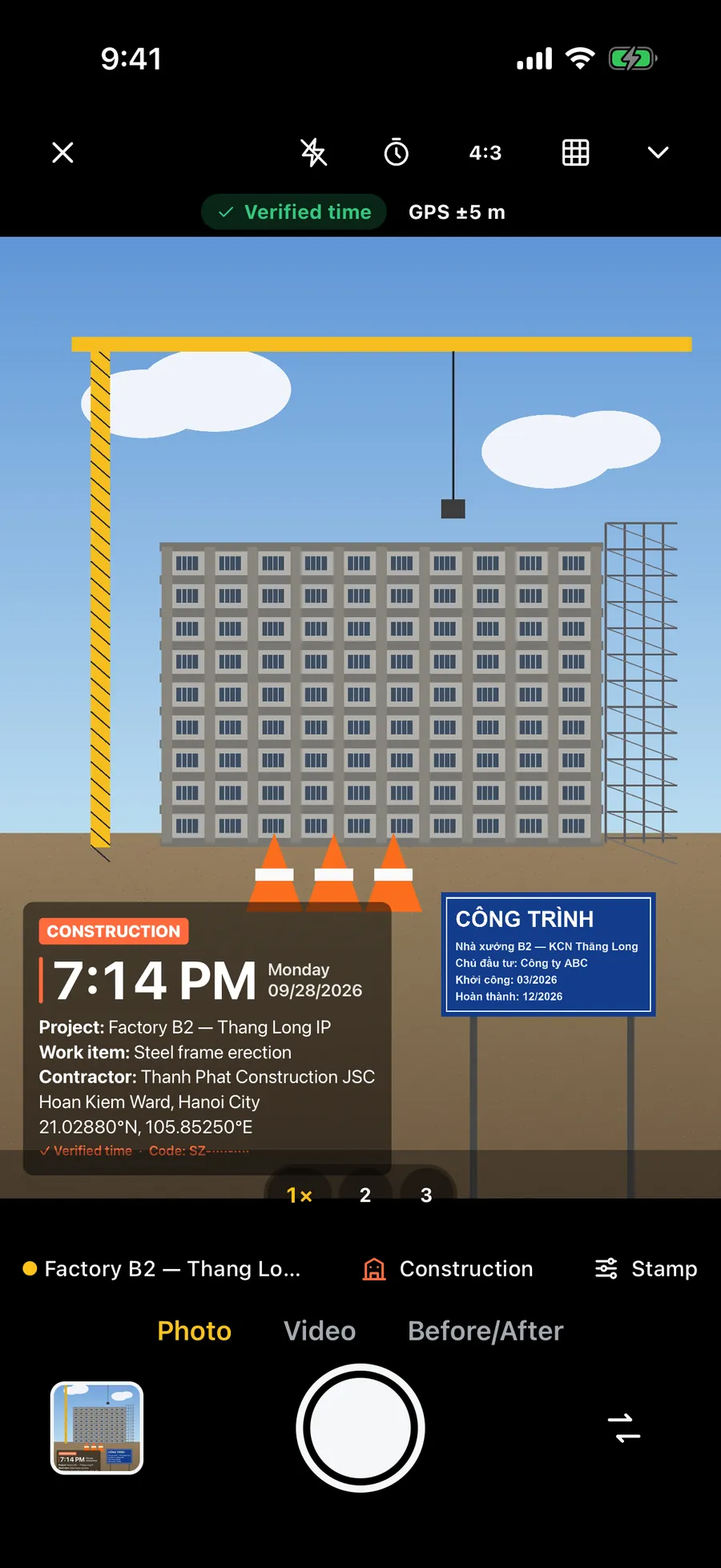
The iPhone Camera saves the date and time inside each photo, but a chat app, an email client or a web form may strip it. Check that your phone's date and time are set automatically. A date printed on the image itself stays visible wherever it goes.
Frequently asked questions
- What should I photograph when a neighbour's tree damages my fence or roof?
- The damage up close and wide, the whole tree, how it stands relative to the boundary, signs of its condition such as dead limbs or a lean, and the break point. Do it before anything is cleared or cut.
- Is my neighbour liable if their tree falls on my property?
- It depends on where you live. Often it turns on whether the owner knew, or should have known, the tree was dangerous, so a healthy tree that falls in a storm is treated differently from a dead one. Check local rules or ask your insurer.
- Can I cut a neighbour's branches that overhang my garden?
- Rules differ by place, and some trees are protected. Photograph first, ask your neighbour in writing, and check your local rules before cutting anything.
- Do photos prove who is responsible?
- No. They show what was visible on the day. Responsibility depends on local law, ownership and the facts, so keep a dated log, quotes and your messages as well.