Putting your things in a self-storage unit? What to photograph on move-in day, in case they come out damaged or missing
Updated · 4 min read
Before you carry a single box in, photograph the empty unit (ceiling, walls, floor and door), then your belongings as they go in, and the lock and the unit number. If you later find damp, pests, damage or a break-in, those dated photos show what the unit and your things looked like at the start. Keep them with your rental agreement and any receipts.
Photos help you describe what you saw and when, but they do not decide who is responsible. Your rental agreement, the facility's rules, any insurance you hold and the law where you live do. Many facilities expect you to insure what you store, so read the agreement before you sign. This is general advice, not legal advice.
What should I photograph in the empty unit?
- The unit number on the door, and the facility's name or a landmark in the same frame.
- The ceiling, each wall and the floor, looking for water stains, cracks, gaps under the door and signs of pests.
- The door, the latch and the lock you are given or bring.
- Anything already wrong, with a wide shot and a close-up. Ask the facility to note it in writing before you move in, and keep that message.
What should I photograph of my belongings?
Take a photo of each valuable or fragile item before it goes in, from the side that shows any existing scratch or dent, and photograph the boxes as you close them with a note of what is inside. Write a short inventory with each item's condition. Receipts or other proof of ownership matter if you ever claim, so photograph them too.
Leave space between the stack and the walls and lift items off the floor on pallets or boards if the facility allows it; that is storage advice rather than a photo tip, but it makes damp easier to spot.
Should I photograph the unit when it is full?
Yes. Once the unit is loaded, take a wide shot from the doorway that shows how things are stacked, then a few shots of the back and sides. It shows later whether something was crushed by your own stacking or was moved while you were away.
What if I find damp, damage or a break-in?
1. Before you touch anything, photograph the door, the lock and the floor outside, then the inside from the doorway.
2. Take wide shots and close-ups of each damaged item from more than one angle, and keep the damaged items as they are until you have spoken to the facility or your insurer.
3. Tell the facility in writing, such as an email, as soon as you can, and ask for an incident number or a reply.
4. If a break-in is likely, report it to the police where you live.
5. Check your storage insurance, and your home or renter's policy, which may or may not cover items kept off-site. Insurers often set a deadline to report, so check yours.
What should I photograph when I move out?
Photograph the unit empty and swept, from the same spots as on move-in day, and the lock, the door and the unit number again, so any later charge for damage or cleaning is easier to question. Keep the move-out confirmation.
How do I show when my photos were made?
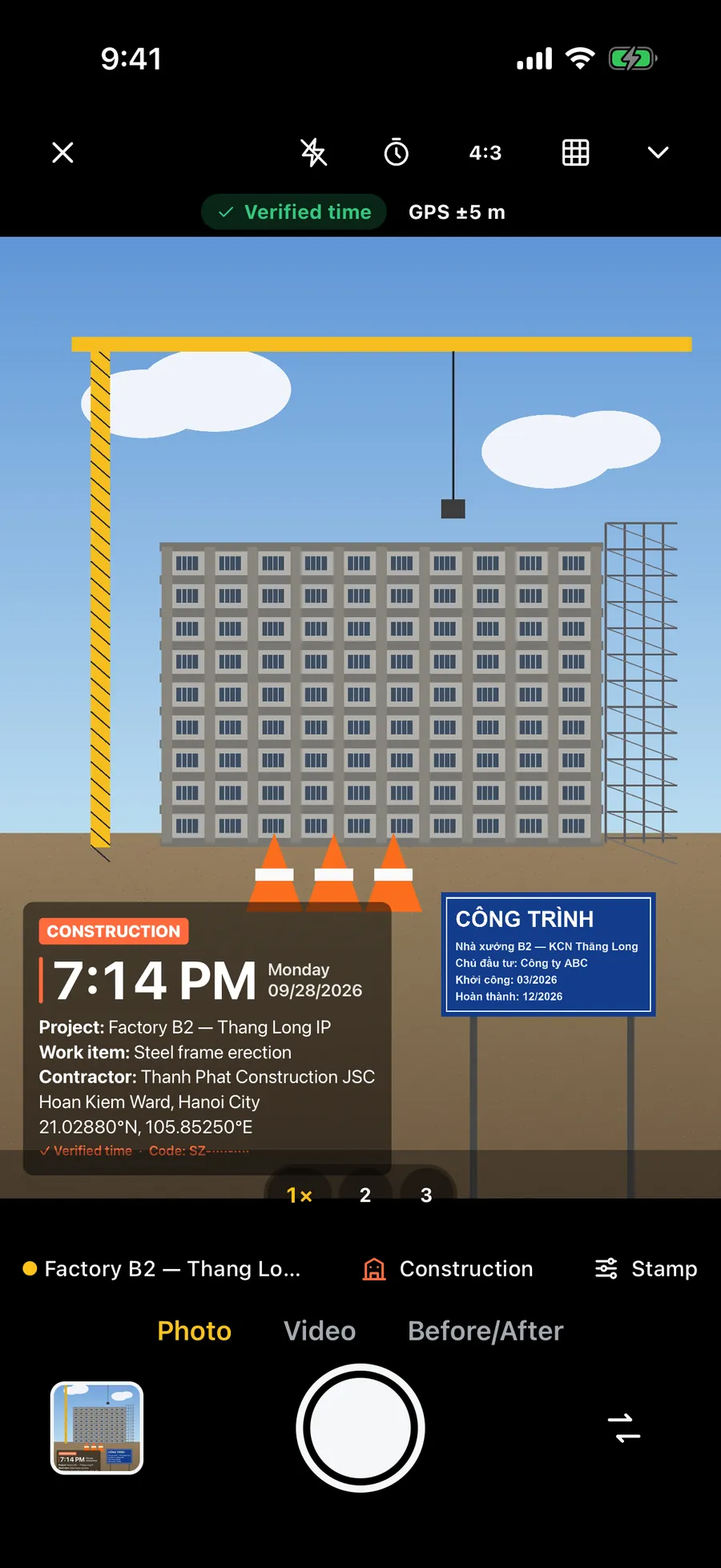
The iPhone Camera saves the date and time inside each photo, but a chat app, an email client or a web form may strip it. Check that your phone's date and time are set automatically. A date printed on the image itself stays visible wherever it goes.
Frequently asked questions
- What photos should I take when I rent a storage unit?
- The unit number, the empty ceiling, walls, floor and door, the lock, and each valuable item and box as it goes in. Write a short inventory with each item's condition.
- What do I do if my storage unit has been broken into?
- Before touching anything, photograph the door, lock and floor outside, then the inside. Tell the facility in writing, report it to the police if a break-in is likely, and check your insurance and its reporting deadline.
- Will photos make the facility or my insurer pay?
- No. They help you describe what the unit and your items looked like and when, but your agreement, the facility's rules, your insurance and local law decide who pays.
- Does my home insurance cover things in storage?
- It depends on the policy: some cover items kept off-site, often with a limit, and some do not. Ask your insurer before you rely on it.