How to document poor workmanship by a builder or contractor with photos, before you refuse to pay or ask for a fix
Updated · 4 min read
To document poor workmanship, photograph each defect twice, once wide enough to show where it is and once close up with a ruler or tape beside it, film anything that does not work, and take the pictures before the work is covered up, repaired or paid for in full. Keep them with the contract, the quote, the messages and the invoices, and write down the date you noticed each problem.
Pictures do not decide a dispute. Whether work counts as defective depends on your contract, the agreed specification and local rules, and an independent inspector or another tradesperson can say more than a photo can. But clear, dated pictures make it much easier to explain the problem, ask for a fix and compare with what was agreed. This is general advice, not legal advice: for a large sum, ask a professional in your country.
When should I take the photos?
As early as you can. Defects get hidden by paint, plaster, tiles or flooring, and once someone repairs or redoes the work, the evidence of how it looked is gone.
Photograph work in progress before it is covered, not only at the end: pipes, wiring and waterproofing before the wall is closed, and the surface before it is painted. Photograph the place before work starts too, so you can show what was already there.
What should I photograph for each defect?
1. A wide shot that shows where the defect is in the room, so anyone can find it.
2. A medium shot of the defect with its surroundings, such as the wall, the window or the fitting next to it.
3. A close-up with a ruler or tape measure beside it, so the size is clear. For something that is not flat, a level or a straight edge held against it shows the gap.
4. A raking shot: light from the side, or a torch held along the surface, shows bumps, waves and uneven plaster that disappear in flat light.
5. The same spot after you point at it or mark it with masking tape, so it is clear which defect you mean.
What should I film instead of photograph?
Anything that is about behaviour: a door that sticks, a tap that drips, a drain that is slow, a socket that does not work, a window that will not close, a floor that creaks. Film a few seconds of the problem happening and say out loud what it is.
Also film a slow walk through the whole job at the end, so the overall state is on record before anyone argues about it.
What should I keep with the pictures?
- The contract or quote, with the agreed specification, materials and dates.
- Messages, emails and voice notes with the contractor, including any promises to come back and fix things.
- Invoices and proof of what you have paid.
- A simple list: the defect, the room, the date you noticed it and the date you told the contractor.
- Any quote from another tradesperson to correct it, or an inspection report, if you ask for one.
How should I tell the contractor?
Put it in writing, in a message or email you can keep, with the pictures attached, and ask for a fix by a date. Stay factual: say what is wrong and what you expect, not who is to blame.
Keep the originals. Chat apps shrink pictures and often remove the information stored inside them, so send copies, and keep the full-size files.
How do I show when the photos were made?
The iPhone Camera saves the date and time inside each photo, and the coordinates if Location Services is on for the Camera. That data is often removed when pictures are sent in a chat app or attached to an email, so the contractor or an adviser may see only the picture.
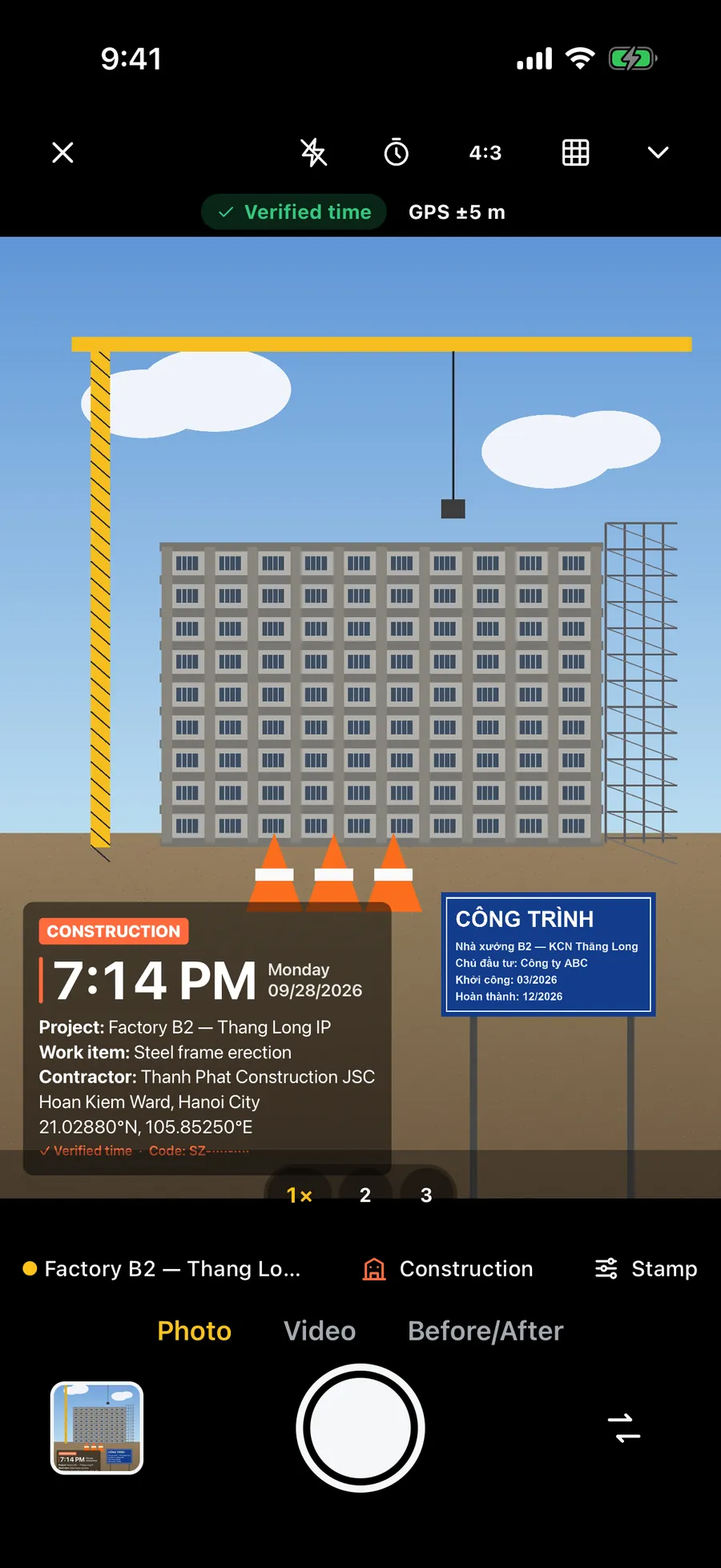
Check that your phone's date and time are set automatically, and do not edit the pictures you keep as a record. A date printed on the image itself stays visible wherever the file goes, which helps when the question is whether a defect was there before the contractor left or came back.
Frequently asked questions
- What photos do I need to show poor workmanship?
- For each defect, a wide shot showing where it is and a close-up with a ruler beside it, plus video of anything that does not work, taken before it is covered up or repaired.
- Should I take photos before the contractor fixes it?
- Yes. Once the work is redone, the evidence of how it looked is gone, so photograph and film it first, then ask for the fix.
- Is a photo with a date on it enough to win a dispute?
- No. What counts as defective depends on your contract, the agreed specification and local rules. Dated photos make the problem easier to show and to compare with what was agreed.
- What else should I keep besides photos?
- The contract or quote, messages with the contractor, invoices and payments, and a list of each defect with the date you noticed it and the date you reported it.
- Do I need an inspector as well?
- For a large or technical problem, an independent inspector or another tradesperson can say more than a photo can, and their report or quote helps your case. Ask a professional in your country.