Snagging a new-build flat or house? How to photograph defects before you complete or sign the handover form
Updated · 4 min read
Snagging is the inspection of a new-build home for defects, usually just before you complete or sign the handover form. Go room by room: take a wide shot of the room, then for each defect a wide shot that shows where it is and a close-up that shows what it is. Mark the spot with a sticky note or a piece of masking tape, write each one on a list with its room, and keep the dated photos together to send to the developer.
Photos help you show what you saw and when, but they do not decide whether a defect is fixed or what you are owed. Your purchase contract, the developer's defect process and the rules where you live do. Read what you are asked to sign before you sign, and ask a professional snagger or a lawyer if you are unsure. This is general advice, not legal advice.
When should I do the snagging inspection?
As early as the contract allows, and before you sign off the home as accepted, because a signed form can be read as you being satisfied. If the developer rushes you, say you want to note defects first. Go in daylight, and bring a torch, a tape measure, a sticky-note pad or masking tape, and a phone charger.
How do I photograph a defect so the developer can find it?
- Take a wide shot first, with a window, door or corner in the frame, so it is clear which wall or room it is.
- Then a close-up from straight on, and a second one at a low angle if the problem is a surface, such as paint or plaster.
- Stick a note or a piece of tape beside the defect before you shoot, so the developer can find it again.
- For a gap or a crack, hold a tape measure beside it in the frame.
Which parts of the home should I check?
1. Walls and ceilings: cracks, patchy paint, nail pops, damp stains.
2. Floors: loose or scratched boards, tiles that sound hollow, gaps at the edges.
3. Doors and windows: they should open, close and lock; check the seals and the glass for scratches.
4. Kitchen and bathrooms: run every tap and flush every toilet, check for leaks under the sink, and look at the grout and sealant.
5. Sockets, switches and lights: test each one, and check any smoke alarm.
6. Heating, hot water and ventilation: check they turn on and work.
7. Balcony or garden, the common areas and the entrance, if they are part of the home.
8. The meter readings and the keys you are handed.
Should I film a video?
A slow walk through each room, saying the date, the address and the room aloud at the start, can show the order of the rooms and what was already there. A video does not replace the close-ups, which are what the developer will need to find and fix each item.
What do I do after the inspection?
- Write one list: the room, what is wrong, and the photo numbers. Send it with the photos to the developer in writing, such as an email, and keep what you sent.
- Note the defects on the handover form if it has a place for them, and keep a copy of what you signed.
- Ask when each item will be fixed, then re-photograph it after it is done.
- Keep everything for as long as any defect period in your contract runs; it differs by country and by contract, so check yours.
How do I show when my photos were made?
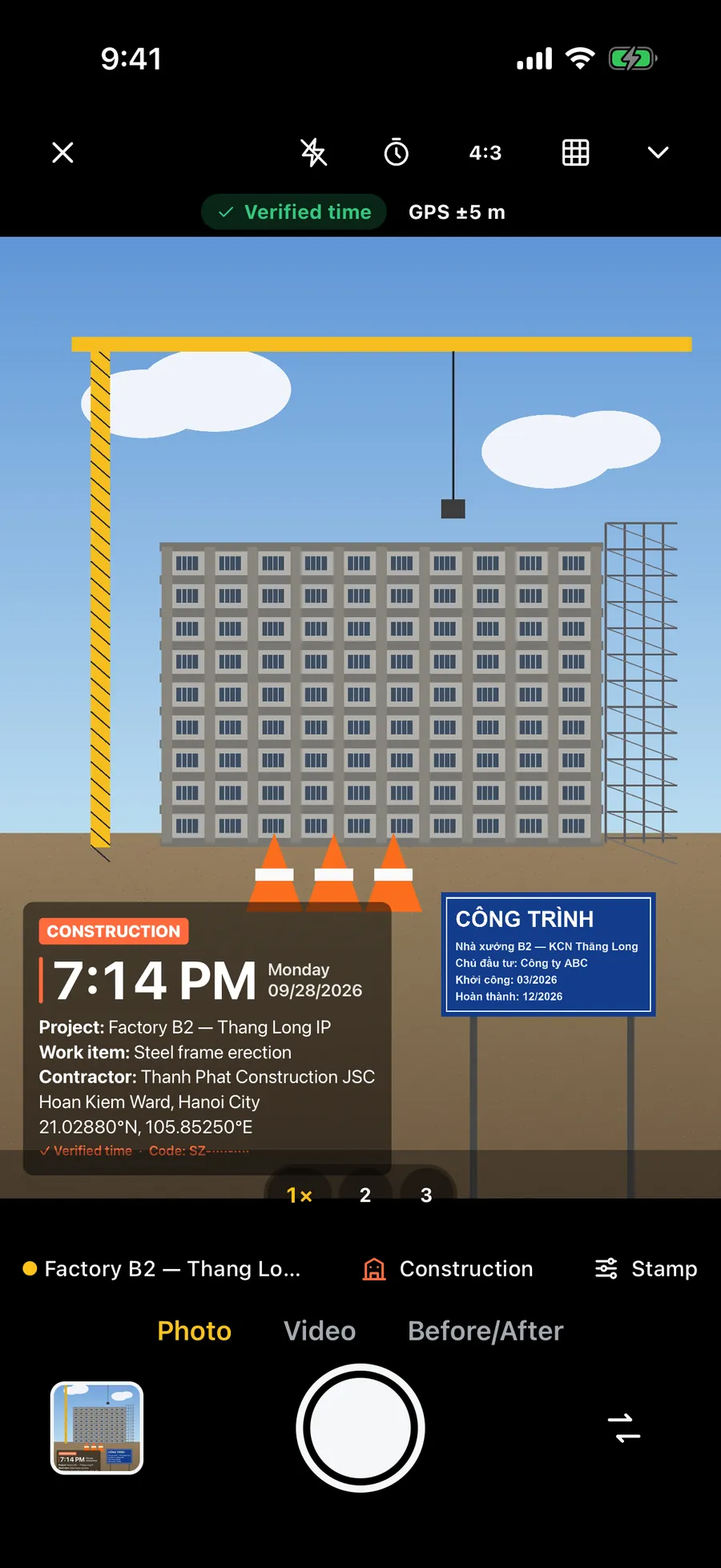
The iPhone Camera saves the date and time inside each photo, but a chat app, an email client or a web form may strip it. Check that your phone's date and time are set automatically. A date printed on the image itself stays visible wherever it goes.
Frequently asked questions
- How do I photograph snags in a new-build home?
- Take a wide shot of each room, then for each defect a wide shot that shows where it is and a close-up of the problem, with a sticky note or tape beside it. Write a list with the room and the photo numbers.
- Should I snag before or after I sign the handover form?
- Before, if the contract allows, because a signed form can be read as acceptance. If you are rushed, note the defects on the form and keep a copy.
- Will photos make the developer fix my snags?
- No. They make each item easier to find and to describe, but your contract and the developer's defect process decide what is fixed and when.
- What should I bring to a snagging inspection?
- A torch, a tape measure, sticky notes or masking tape, a phone charger, and a pen and your list. Go in daylight.