Someone hit your parked car and drove off? What to photograph before you move it
Updated · 5 min read
Photograph the car exactly where it stands, before you move it or wipe anything off. Take a wide shot that shows the whole car and the parking space, then the damage from several angles, then any paint transfer, broken plastic or glass on the ground. Then look around for cameras and for a note. Footage from shops and car parks is often overwritten within days, so the photos you take now, and how quickly you ask, matter.
This guide is about the photos. What you can claim, whether the police take a report and how your insurance treats it depend on your country, state and policy, so check with your insurer and the local police. This is photo advice, not legal advice.
What should I photograph first?
1. A wide shot of the whole car in its space, taken from a few metres away, so the plate, the lines of the space and the cars next to it are visible.
2. The damage from a distance, then from arm's length, then very close. Photograph it straight on and from the side, because a shallow dent only shows at an angle.
3. Paint transfer: a streak of another colour on your car is a clue to the other vehicle. Photograph it before you try to rub it off, and put a coin or a ruler next to it for scale.
4. Debris on the ground: pieces of plastic, glass or a broken light cover. Photograph where they lie relative to your car, and keep them if you can.
5. The height of the damage, with a tape measure or your hand against the car. A bumper-height scrape and a door-height dent point to different vehicles.
How do I show where the car was and what was around it?
- The street, the car park level or bay number, a street sign or a shop front in the same frame as your car, or in a photo taken right beside it.
- Any camera you can see: shop cameras, doorbell cameras, a barrier or ticket machine, a street camera. Photograph the camera and the way it points.
- Whether there is a note, a witness or a business that was open nearby. Write down names and ask for contact details.
- The rest of the car. Photograph all four sides, even if only one is damaged, so nobody can argue that other damage was already there.
How do I show the damage is new?
Photos cannot prove how old a dent is, but they can help. Clean, bright metal inside a scrape, wet or fresh paint on the edge, and a car that is clean around the damage all suggest recent damage, while rust, dirt in the scratch or old stains suggest the opposite. The strongest help is an earlier photo of the same side of the car, such as the last time you washed it or took it to a garage, so look through your phone for one.
Photograph the car again at a set time, such as the next morning, as well as right away, and say plainly in your notes which photo was taken when.
What else should I do and keep?
- Do not chase a driver who leaves. Note anything you saw: the make, colour, partial plate.
- Report it to the police and keep the reference number. Many insurers ask for one, and some countries or policies have a time limit for reporting.
- Ask nearby businesses and the car park operator to keep their footage, in writing if you can, and do it on the day, because it is often deleted after a few days.
- Get repair estimates in writing, with the garage's name.
- Tell your insurer before you pay for repairs. Ask how a hit-and-run is handled on your policy and what your excess or deductible is.
How do I keep the date and place with the photos?
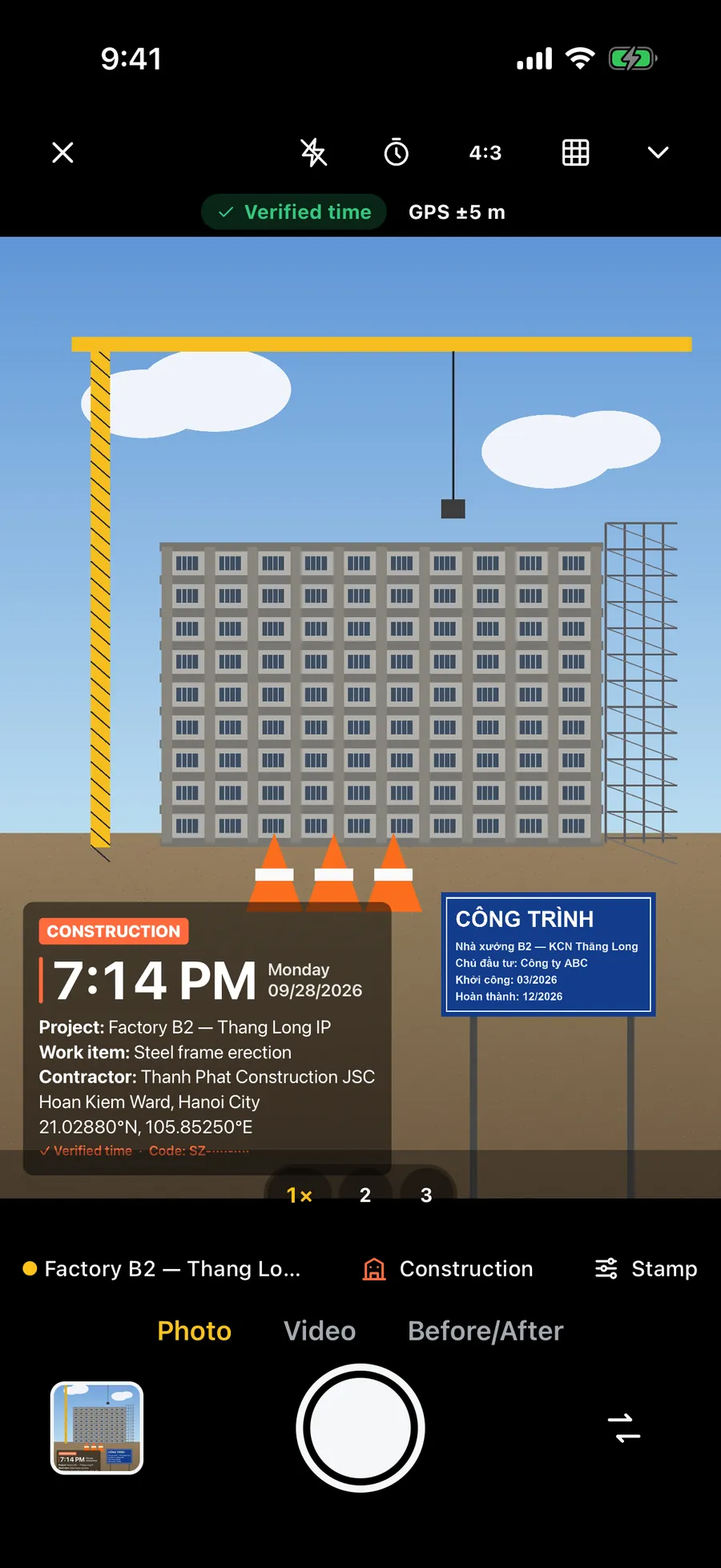
The iPhone Camera saves the date and time in each photo's hidden data, together with the coordinates if Location Services is on for the Camera. That data is often removed when a photo is sent through a chat app, uploaded to a claim form or printed, so the person who reads your claim may see only the picture.
Check that the phone's date and time are set automatically, keep the originals on your phone as well as any copies, and do not crop out the surroundings. A date and place printed on the picture itself stay visible wherever the file ends up.
Frequently asked questions
- What photos should I take if someone hit my parked car and left?
- Take a wide shot of the whole car where it stands, the damage from far, near and close, any paint transfer or debris, the street or bay, and any cameras nearby. Photograph before you move the car or wipe anything off.
- Should I move my car before taking photos?
- No, if it is safe to leave it. Photograph it where it is so the position and the debris are part of the picture.
- Can photos show who hit my car?
- Not by themselves. Paint transfer, debris and the height of the damage can be clues, but an identification usually comes from a witness or camera footage, so ask nearby businesses to keep theirs quickly.
- How do I show the damage was not there before?
- Look through your phone for an earlier photo of the same side of the car, and photograph all four sides now. Photos cannot prove how old damage is, but a clear before and after helps.
- Does a timestamp on the photo prove when it was taken?
- No. It makes the date and place easy to see, but it is not proof. Clear, honest photos taken at the spot on the day, with a police reference and written estimates, make your claim easier to follow.