Car insurance claim photos: what to shoot at the scene of a collision
Updated · 3 min read
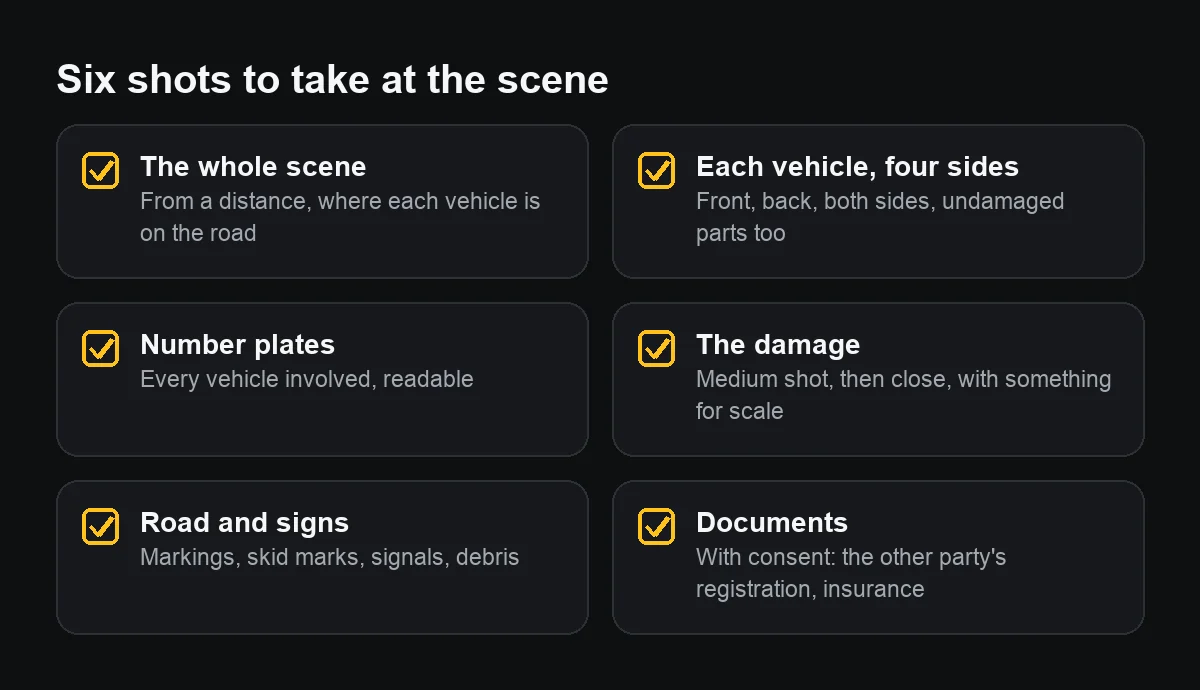
After a collision, once everyone is safe, shoot from far to close: the whole scene and where each vehicle stands, all four sides of each vehicle, the number plates, close-ups of the damage, the road and signs, then the other party's documents if they agree. Photos with a clear date, time and place help a claim move faster, but the insurer decides what it needs.
This is a checklist to follow on the spot. It does not replace your insurer's instructions or those of the authorities.
What must I do before taking photos?
Safety first, photos second:
- Turn on the hazard lights, check for injuries, call an ambulance if needed.
- If a vehicle blocks the road dangerously, follow the authorities' instructions about moving it. If you may leave the scene as it is, photograph it before anything moves.
- Call the hotline on your insurance certificate as early as possible; many insurers have photo instructions and take photos through their own app.
Never stand in a live lane for a better angle. No photo is worth that.
Which photos should I take at the scene?
- The whole scene from a distance, from several directions: where the vehicles are, the lanes, the junction.
- Each vehicle from all four sides, including undamaged sides, to show its overall condition at the time.
- The number plates of every vehicle involved, readable.
- The damage: a medium shot to show where it is on the vehicle, then close-ups. Put a key or something familiar next to a dent for scale.
- The road: markings, skid marks, debris, potholes; nearby signs and traffic lights.
- With the other party's consent: their registration, insurance certificate and contact number.
How should the date, time and place come across?
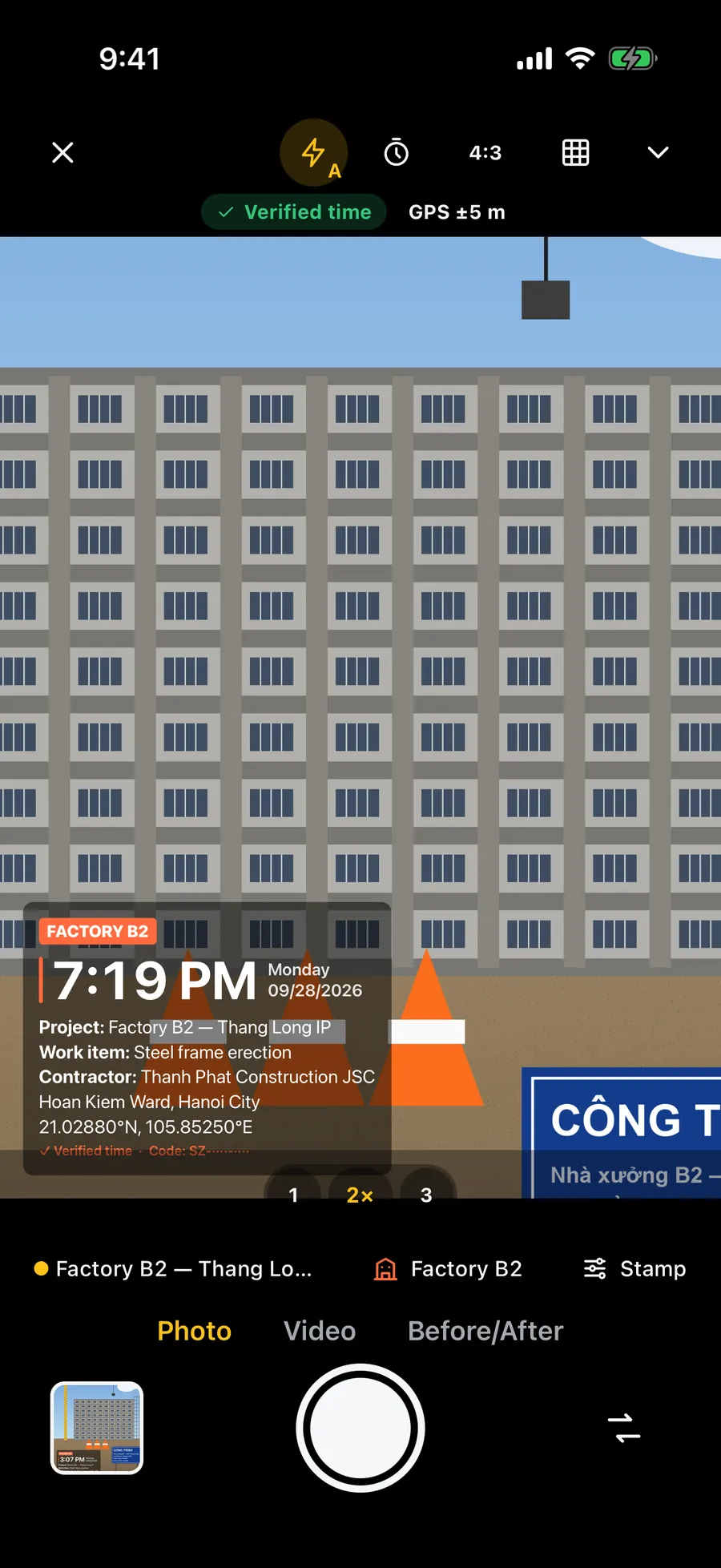
When and where it happened are the first things an insurer asks. iPhone photos store the time and location in hidden data if the Camera may use Location Services, but that data is often lost when photos go through a chat app. A few ways to keep it:
- Take one photo that includes a street sign, a house number or the nearest kilometre post.
- Send the originals by email or through the insurer's app instead of only by chat.
- Write down the time, place and a short account in Notes while you still remember clearly.
- Keep the iPhone clock on Set Automatically.
Should I record video too?
A video walking round the scene complements the photos well: it shows distances, directions and the traffic around. Dashcam footage, if you have it, should be saved somewhere safe before it is overwritten. Photos are still needed because they are easier to number and attach to a file.
How do I keep the photos after leaving the scene?
- Do not edit, filter or crop the originals. If you need to mark something, do it on a copy.
- Put them in their own album named with the date and plate number.
- Add photos of the vehicle at the garage before repair, during the assessor's inspection and after the repair.
- Keep them until the claim is closed.
Do photos decide the claim?
No. Photos are your own record of what you saw and help describe what happened clearly and quickly. Whether and how much is paid depends on your policy, the official report, the assessment and the insurer's process. Ask them what they need and send exactly that.