Move-in and move-out photos for a rental: how to make getting your deposit back easier
Updated · 4 min read
When you move into a flat or a rented room, photograph every area in a fixed order, take close-ups of every defect and of the electricity and water meters, and send the whole set to the landlord the same day so both of you hold a dated copy. When you move out, shoot again from the same spots. Most deposit disputes come down to “was that mark already there?”, and two sets of photos side by side answer that fastest.
Everything below works with the phone you already have.
What should I photograph when I move in?
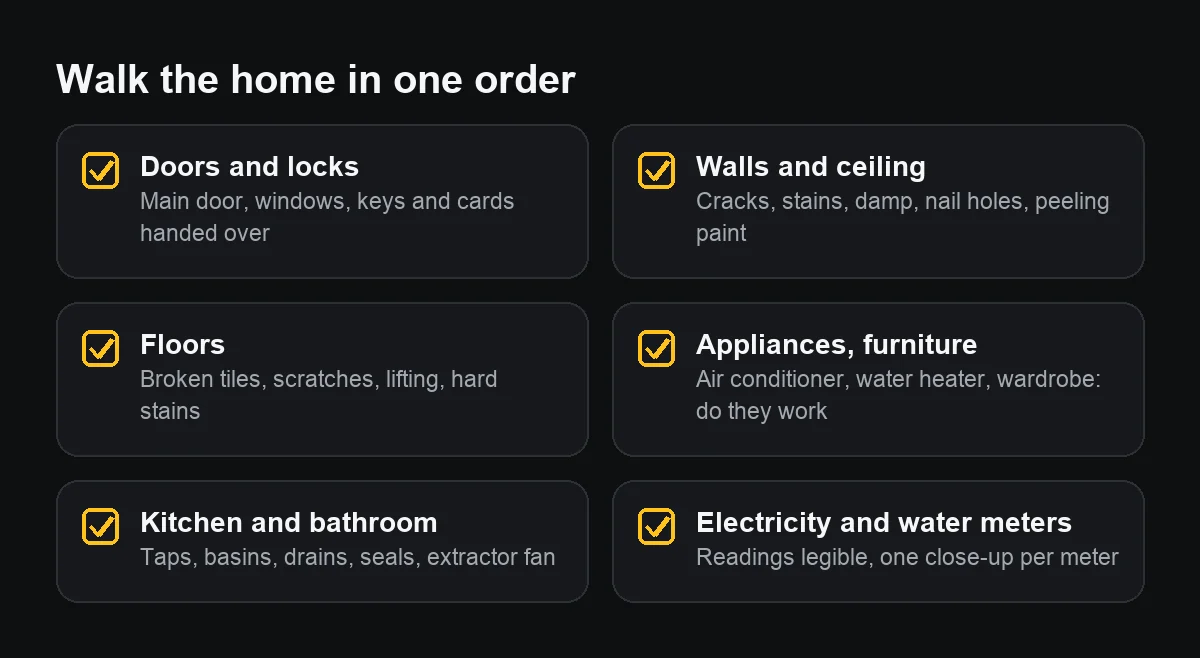
Walk through in one order, each room from the doorway, clockwise:
- One wide photo of each room, from the door.
- Walls, ceiling and floor: cracks, stains, damp, nail holes, broken tiles, lifting floorboards.
- Doors, locks, windows, insect screens; the number of keys and cards handed over.
- Appliances and furniture: air conditioner, water heater, fridge, washing machine, bed, wardrobe. Switch them on and photograph them running.
- Kitchen and bathroom: taps, basins, drains, seals, extractor fan.
- Electricity, water and gas meters: close enough to read.
Shoot every defect twice: one wide so it is clear where it is, one close so it is clear what it is. Put something familiar like a lighter or a coin next to a crack for scale.
Are photos or video better?
Have both. One continuous video through the whole home shows context and that nothing was left out; photos are sharper, easier to point at and easier to attach to a handover form. Film slowly and say the room's name as you enter. The iPhone Camera shows no time on video, so say the date and time at the start of the clip.
How do I make the set clearly dated and accepted by both sides?
- Send all the photos to the landlord by chat app or email on move-in day, with one line: “Condition photos of the flat at move-in, 01/10/2026.” That message carries its own date, and the landlord can respond early.
- Write the main defects into the handover form or an annex to the lease, signed by both. Photos support the paperwork; they do not replace it.
- Keep the originals on the phone or in a backed-up folder. Photos sent through a chat app are compressed and may lose their location and original capture time.
- Set the iPhone clock to Set Automatically before you start.
How do I shoot again when I move out?
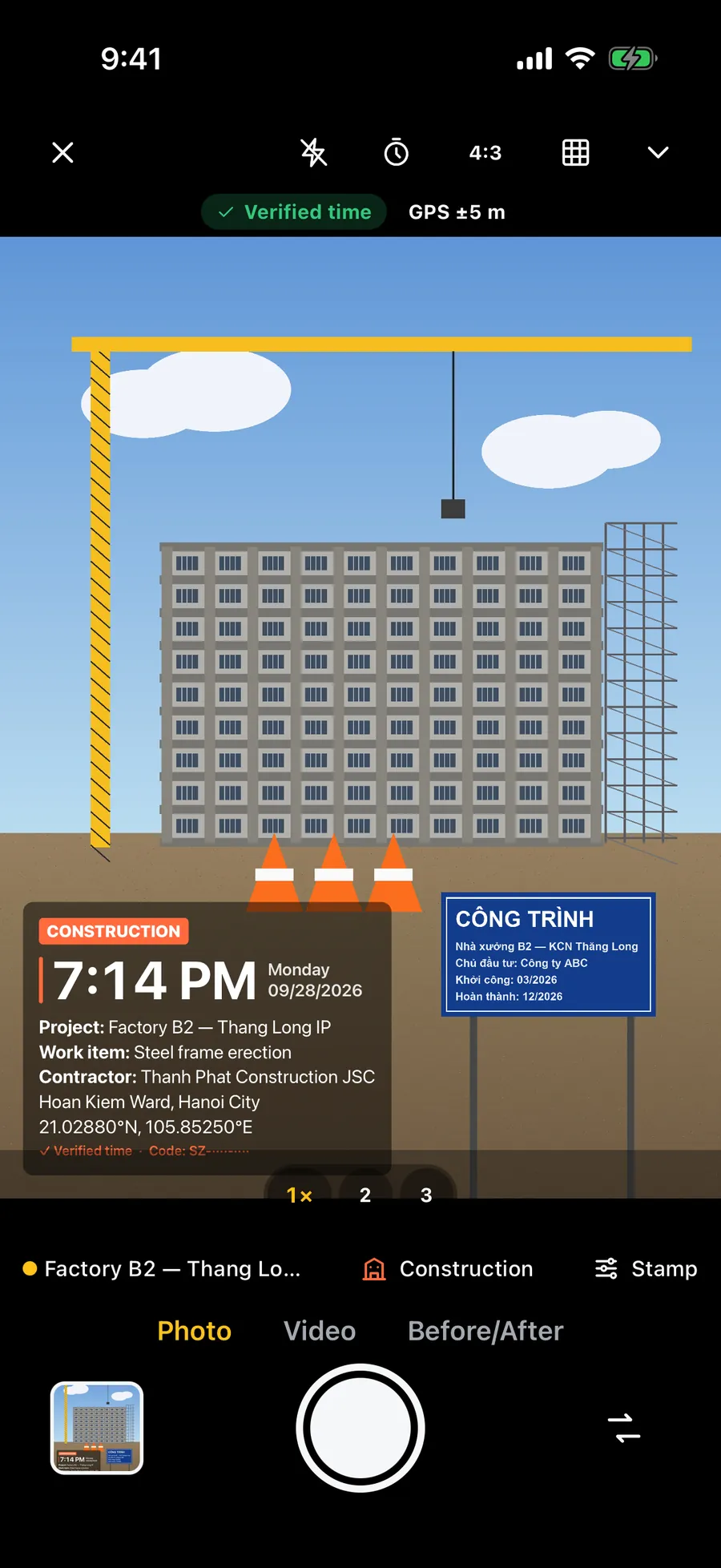
Open the move-in set, walk the same order and shoot from the same spots at the same angles. Add the meter readings at handover and the keys returned. If you can, walk round with the landlord and take the photos in front of them.
If a mark is disputed, put the move-in and move-out photos side by side. Ordinary wear after living somewhere, such as faded paint or light floor scuffs, is usually treated differently from damage; your lease and what you both agreed decide, not the photo.
Which mistakes make a photo set useless?
- Only wide shots and no close-ups: nobody can see the crack.
- Dark or blurred photos: switch all the lights on, wipe the lens, hold steady.
- Never sending them to anyone: produced only at move-out, they invite suspicion.
- Leaving them mixed in your personal camera roll and deleting them while tidying up.
Should the landlord do the same?
Yes. A landlord who takes the same set before handing over the keys also has something to discuss if real damage happens. Both sides shooting and sending to each other is the simplest way to make returning the deposit painless.